
Why Germany is Becoming the Top Study Destination for French Students
Studying in Europe is one of the best decisions you can make for your educational future and career prospects.
According to 2026 World’s Best Cities Report, London, Paris, Madrid, Rome, Berlin and Barcelona are all within the top 10 list.
There are also around 1.76 million international students in Europe, making it a hub for higher education and career opportunities.
According to Landgeist, 9.2% of that total figure study in France, whilst 11.2% study in Germany. Both are highly regarded Western European nations with rich histories and are global players on the international stage.
However, a trend has emerged over the past few years – students are more often than not, choosing Germany over France.
Read on to discover why, and what it can mean for your educational future with Gisma.
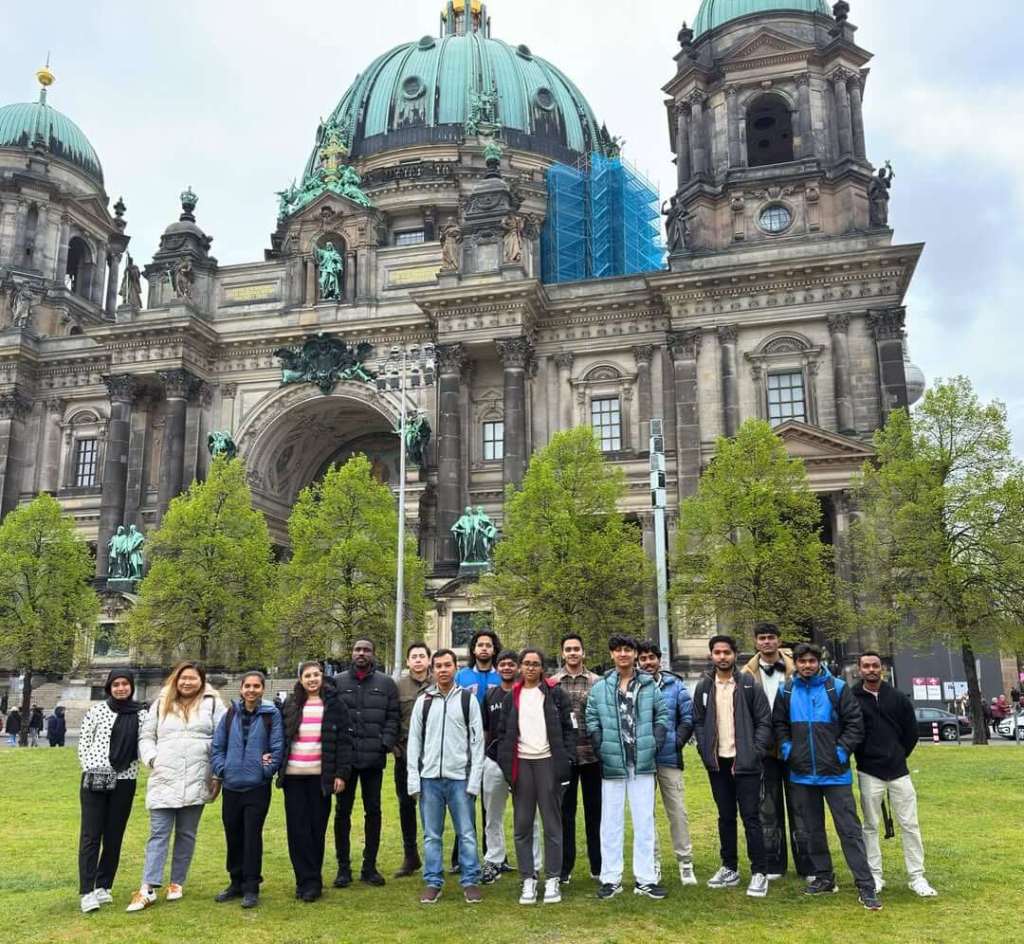
What are the Key Reasons French Students Prefer Germany?
So, why is Germany becoming the more popular choice over France?
The reasons are practical more than anything else.
Tuition fees sit at the top of the list. According to Study.EU, French public universities charge around €2,895 per year for a bachelor’s degree and €3,941 for a master’s degree.
Meanwhile, most German public universities, by contrast, charge nothing at all, even for international students. For a French student weighing up two equally strong study destinations, that difference is hard to ignore.
Then there’s the job market. Germany is the world’s third-largest economy, and its appetite for international talent has grown steadily over the past decade. Employers in cities like Berlin, Munich, and Frankfurt are increasingly hiring non-German speakers, which lowers one of the biggest barriers international students historically faced.
Post-study options matter too. Germany offers an 18-month job seeker visa after graduation, giving students a genuine opportunity to find work before committing to a long-term visa. France offers up to two years for master’s graduates, but Germany’s broader job market and faster path to an EU Blue Card make it the more attractive prospect for many.
Then there’s campus life. With around 402,000 international students in 2024-2025, Germany has built an infrastructure around welcoming people from elsewhere.
From the support systems to the English-taught programmes, and the sheer variety of cities to study in – it’s becoming clearer as to why Germany is the more favourable choice.
Comparison: Studying in Germany vs France
When it comes to studying in Germany vs France, both countries offer a strong European education. The differences come down to priorities.
| Germany | France | |
| Tuition fees (public universities) | Free for most programmes | Between €2,700-€3,700 per year |
| Average monthly living costs | €800-€1,000 | €800-€1,200 |
| Post-study work visa | 18 months | Up to 2 years (master’s) |
| International students (2024-2025) | 402,000 | 445,000 |
| Language of instruction | English and German | French and some English |
| Path to EU Blue Card | Yes | Yes |
| PR eligibility | After 2 years of work + income threshold | After 5 years of residence |
On the France vs Germany question, Germany edges ahead on cost and career infrastructure. France holds its own in fields such as fashion, luxury goods management, and the arts.
But for students focused on business, technology, or data (such as the programmes available at Gisma), Germany is increasingly the smarter choice.
Popular Programmes Among French Students in Germany
Germany has long had a reputation for engineering and the natural sciences, but the picture has broadened considerably over the past few years.
For French students, the most in-demand areas tend to be business, management, data science, and technology. These align directly with where the German job market is heading, and where Germany higher education for French students has expanded its English-language offer most rapidly.
Top universities in Germany for international students, including both public institutions and accredited private universities like Gisma, now offer a wide range of programmes taught entirely in English. This shift has made Germany far more accessible to French students whose German language skills are still developing.
At Gisma, programmes such as the AMBA-accredited Global MBA, the MSc in Data Science, AI, and Digital Business, and the CIM-accredited BSc and MSc in Business Management and Marketing are designed with career relevance at their core.
Each programme is built around what employers in Germany and beyond are actively looking for, with small class sizes and direct industry connections included as standard.
Cost of Living in Germany for French Students
The living cost in Germany for French students varies depending on the city, but the overall picture is manageable.
Berlin and Potsdam, where Gisma’s campuses are located, sit comfortably within the €800–€1,000 monthly range. That cost covers a shared flat or student accommodation, a monthly transport pass, groceries, and a reasonable social life.
For context, the average monthly cost of living in France runs between €800 and €1,200, with Paris pushing towards the upper end. For French students leaving a major French city, Germany often represents less of a drain on the bank balance and improved day-to-day expenses.
A few practical notes worth knowing: Germany has a well-developed student discount system, public transport is reliable and reasonably priced, and cooking at home is straightforward with budget supermarkets like Aldi and Lidl widely available. The basics are affordable. The quality of life, in most students’ experience, is high.
Scholarships and Financial Support Options
Scholarships are available in Germany for French students, and worth pursuing even when tuition fees are removed from the equation.
The DAAD (Deutscher Akademischer Austauschdienst) is the first port of call. It offers a range of funding options for international students, including those from EU countries.
Erasmus+ funding may also be available depending on your home institution.
When tuition fees are already zero, any scholarship a student receives goes directly towards living costs. That changes the financial picture considerably, and for many students makes study abroad in Germany from France a more realistic option than it might initially appear.
At Gisma, a financial aid team is available to help you understand what support you may be eligible for and how to apply.
Student Visa and Admissions Process for French Students to Study in Germany
As EU citizens, French students do not need a student visa to study in Germany.
This removes one of the most common friction points for international students. No blocked account requirement, no mandatory health insurance proof for visa purposes, no embassy appointment. For students considering study in Germany for French students specifically, this is one of the most underappreciated advantages of EU citizenship.
Admission requirements vary by institution and programme. Most master’s programmes ask for a recognised bachelor’s degree, proof of English language proficiency (typically IELTS or TOEFL), and a minimum academic score of around 65% or equivalent. Some programmes may also ask for a statement of purpose or references.
At Gisma, the admissions process is designed to be straightforward and well-supported. Our team is on hand to guide applicants through each step, from initial enquiry to enrolment.
Student Life and Cultural Experience in Germany
Student life in Germany for EU students has a character all of its own.
The country’s cities each feel distinct. Berlin is creative, fast-moving, and fiercely international. Potsdam, where Gisma’s flagship Think Campus sits, offers something a little different: a quieter pace, a UNESCO-listed old town, and easy access to Berlin whenever you want. For French students weighing up where to base themselves, both are worth serious consideration.
Fortunately for French students, the cultural adjustment from France to Germany is relatively gentle. Both countries share a broadly Western European sensibility, and Germany’s cities are well set up for newcomers. English is widely spoken in most university environments and larger cities, and the international student communities are large enough that finding your footing doesn’t take long.
That said, making the effort to learn German opens more doors, socially and professionally. Gisma’s German Add-On Course takes students from A1 to B2 over two years – a genuine advantage when it comes to both integration and job applications.
With 90+ nationalities represented across Gisma’s student body, French students study alongside people from across Europe, Asia, Africa, and the Americas. That breadth of perspective tends to be one of the things graduates remember most.
“Germany has become a country that many people abroad associate with hope.”
Angela Merkel
Former Chancellor of Germany (2005 – 2021)
Work Opportunities in Germany for French Students During and After Studies
The benefits of studying in Germany for French students extend well beyond the classroom.
Germany’s employment market is one of the strongest in Europe, and is actively looking for skilled graduates. Key industries hiring international talent include technology, engineering, consulting, finance, and logistics, and the growth of English-language workplaces in cities like Berlin has made the market more accessible than ever.
While studying, international students can work up to 140 full days or 280 half days per year, whilst EU students can take up any type of work under the same conditions as German students.
That’s enough to cover a meaningful portion of living costs and, more usefully, to start building professional experience in Germany before graduation.
After completing their studies, French students, as EU citizens, have considerable flexibility to remain and work in Germany. The 18-month job seeker visa applies to non-EU students; French graduates operate under EU freedom of movement rules, giving them even greater options.
Gisma’s Career Centre connects students with companies including Volkswagen, SAP, Siemens, Zalando, and Delivery Hero, among others.
Tips for French Students Planning to Study in Germany
So, ready to say ‘Guten Tag’ to your new student destination?
Before you apply, here are a few things worth knowing.
Start your German early. Even a working knowledge of the language changes your experience in Germany. Gisma’s German Add-On Course is one structured route. Apps, evening classes, or online tutors before you arrive all help too.
Sort your finances before you land. Open a German bank account as soon as possible after arriving. Look into DAAD and Erasmus+ eligibility before your programme begins. Having a financial plan in place early removes a significant source of stress.
Make the most of your EU status. As a French citizen studying in Germany, you have more flexibility than many of your fellow international students. No visa complications, no blocked account. That’s a genuine advantage.
Use the career infrastructure. Germany’s job market rewards proactivity. Use Gisma’s Career Centre, attend employer events, and treat internship and networking opportunities as part of your degree.
Give yourself time to settle. The first few weeks in a new country involve a learning curve regardless of how prepared you are. Berlin and Potsdam are well set up for international students, but it still takes time. Most students find their rhythm faster than they expect.
Conclusion
Germany’s rise as a study destination for French students isn’t a coincidence. Free tuition at public universities, a strong job market, straightforward entry as an EU citizen, and cities built for international student life have made it one of the most compelling choices in Europe.
The numbers back this up. More students are choosing to study abroad in Germany from France each year, and the momentum is only growing.
For French students thinking about where to take the next step, Gisma offers something specific: internationally accredited programmes, small class sizes, and direct connections to the German job market, on a campus that sits at the centre of one of Europe’s most dynamic regions.
The decision is yours. But the case for Germany, and for Gisma, is a strong one.
Ready to create impact?
Frequently Asked Questions
Is Germany safe for French international students?
Yes. Germany consistently ranks among the safer countries in Europe for international students. As with any country, it’s worth being aware of your surroundings, particularly in busy urban areas, but the overall environment is welcoming and well-regulated. French students in Berlin and Potsdam tend to find the transition straightforward (Travelstats hub ranks Berlin as ‘safe’ for daytime walking safety).
What language requirements are needed to study in Germany?
It depends on the programme. English-taught programmes in Germany at Gisma typically require an IELTS score of around 6.0–6.5 or a TOEFL equivalent. German-taught programmes require proof of German language proficiency. French students whose prior education was delivered in English may already meet the requirements; those who studied in French will likely need to take a recognised English language test.
What documents are required for French students to apply in Germany?
As EU citizens, French students do not need a student visa to study in Germany. Standard application documents for German universities typically include a recognised bachelor’s degree (for master’s programmes), academic transcripts, proof of English language proficiency, a CV, and in some cases a personal statement or references.
Can French students stay in Germany after completing their studies?
Certainly. As EU citizens, French students have the right to remain and work in Germany after graduating under EU freedom of movement rules. Once employed, the pathway to long-term residency and eventually permanent residency is well established. The EU Blue Card is available to those meeting the salary threshold, offering an accelerated route to permanent residency.
What are the best programmes for French students in Germany?
Business, technology, and data-focused programmes align particularly well with Germany’s job market strengths. At Gisma, the AMBA-accredited Global MBA, the MSc in Data Science, AI, and Digital Business, and the CIM-accredited BSc and MSc in Business Management and Marketing are highly popular with international students.
Want to explore more?