

Difference Between Supply Chain Management and Logistics: Key Insights
Imagine standing in a busy airport terminal. Planes touch down, trucks load cargo, packages race along conveyor belts, and warehouse doors slide open and shut. Every movement is perfectly timed; every process is connected. Behind that precision lies the invisible backbone of global business: supply chain management and logistics.
If you’re a student or early-career professional, you’ve probably heard these terms and wondered: what exactly is supply chain management? And how does it differ from logistics?
In this blog, we’ll unpack the journey of how products move from idea to delivery, how companies create global value through smart systems, and why it all matters, especially if you’re considering shaping that future through the MSc in Supply Chain Management at Gisma University of Applied Sciences.
Let’s take off on that journey together.
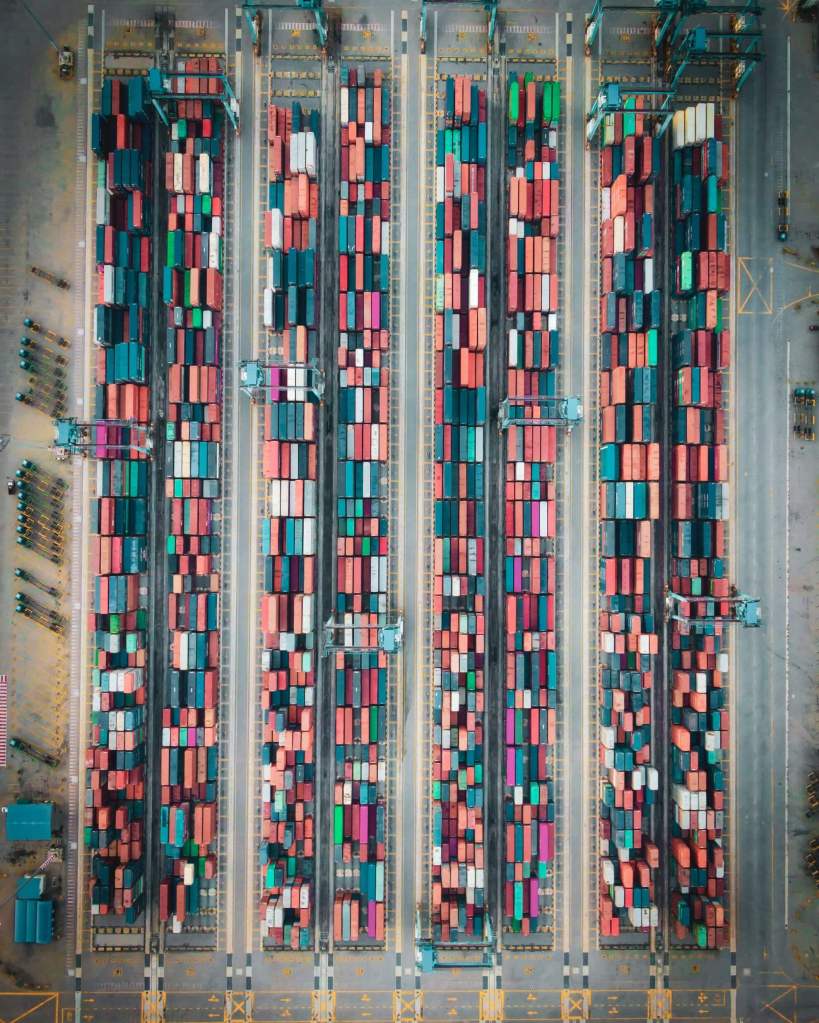
What is Supply Chain Management?
Picture this: a smartphone is born. Production starts with raw minerals mined on one continent. Components are manufactured on another. Software is developed somewhere else entirely. These materials then travel across oceans to be assembled, packaged, and delivered into your hands. The coordination behind every step of that process is supply chain management.
Supply chain management (SCM) covers the entire network of flows: sourcing, manufacturing, logistics, distribution, and even returns. It’s the larger system that creates value, optimises costs, manages risks, and ensures customer satisfaction across global markets.
In short, when you think ‘what is supply chain management?’, think of the complete value-creation journey from raw material to end user.
What is Logistics Management?
Now, zoom in. Within that big journey lies the daily rhythm of warehouses, routing trucks, scheduling shipments, managing inventory, and ensuring products arrive on time and in perfect condition. That’s logistics management, a key part of SCM.
Logistics focuses on the movement and storage of goods: transporting, storing, and handling the flow from point A to point B in the supply chain. When someone mentions logistics and supply chain management, they’re referring to interconnected functions but logistics is the operational core, while SCM drives the overarching strategy.
The Supply Chain Management Process
Let’s break down the supply chain management process into five main stages. The same roadmap you’d explore in Gisma’s MSc programme:
- Planning: Estimating demand, aligning capacity, and deciding what and how much to produce.
- Sourcing: Selecting suppliers, negotiating contracts, and evaluating performance.
- Manufacturing: Converting raw materials into finished goods, maintaining quality, and managing production schedules.
- Delivery: Distributing products, managing transport, warehousing, and order fulfilment.
- Returns/Reverse Logistics: Handling product returns, recycling, and refurbishing to ensure sustainability.
Each of these steps demonstrates how the supply chain management process connects people, data, and products into one seamless system.
Importance of Supply Chain Management
Why is supply chain management so important? Because in today’s globalised economy, it’s what keeps businesses competitive and customers happy. Companies that manage their supply chains well can:
- React quickly to disruptions like geopolitical changes or natural disasters.
- Reduce costs while maintaining high service quality.
- Build sustainable, circular systems that reduce waste.
- Strengthen relationships with suppliers, partners, and customers.
For students exploring supply chain managementjobs, these skills translate directly into global opportunities, from operations and logistics to procurement, planning, and sustainability.
Benefits of Supply Chain Management
When SCM is done effectively, the benefits are far-reaching:
- Greater operational efficiency and reduced costs.
- Higher customer satisfaction with on-time, accurate deliveries.
- Data-driven decision-making powered by analytics and automation.
- Stronger risk management and faster recovery from disruptions.
- Positive environmental and social impact through ethical sourcing.
Understanding the benefits ofsupply chain management gives future professionals insight into what drives long-term success in business and what makes this field so dynamic.
Difference Between Supply Chain Management and Logistics
At first glance, supply chain management and logistics might sound similar. In reality, they form two halves of one interconnected system. Knowing the difference between supplychain management and logistics helps explain how companies move from strategy to execution.
The Big Picture: Supply Chain Management
Supply chain management (SCM) is the master plan. It covers everything from sourcing raw materials and managing suppliers to overseeing production, warehousing, and final delivery. SCM ensures that the entire system, from design to distribution, runs efficiently, cost-effectively, and sustainably.
The Operational Core: Logistics
Logistics is the engine room of the supply chain. It’s about how goods physically move; transportation, warehousing, and inventory management. If SCM decides what should happen and why, logistics determines how it gets done.
In Short
- Supply Chain Management: Strategic, long-term, system-wide coordination.
- Logistics: Tactical, short-term, movement-focused execution.
Think of SCM as mapping the route and logistics as driving the vehicle. Both are essential, SCM sets the direction, and logistics keeps the journey in motion.
Students in Gisma’s MSc in Supply Chain Management programme gain expertise in both. They can learn how to balance strategy with execution to build efficient, digital, and sustainable systems.
SCM vs Logistics: How They Compare
| Aspect | Supply Chain Management (SCM) | Logistics Management |
| Scope | Broad — covers sourcing, production, distribution, and returns | Narrower — focuses on transportation, warehousing, and delivery |
| Objectives | End-to-end value creation and strategic efficiency | Timely, cost-effective delivery of goods |
| Focus Area | Multi-stakeholder coordination (suppliers, manufacturers, customers) | Operational movement of goods and materials |
| Process Involved | Planning → Sourcing → Production → Delivery → Returns | Storage → Packaging → Shipment → Distribution |
| Software | ERP systems, SAP SCM, Oracle SCM Cloud | Transport (TMS) and Warehouse (WMS) Management Systems |
| AI Tools | Predictive analytics, automated procurement, simulation | Route optimisation, real-time tracking |
| Goal | Build sustainable, efficient global networks | Execute precise product movement |
| Flow Type | Information, materials, and financial flows | Physical goods and data flows |
| Time Orientation | Long-term strategic planning | Short-term operational focus |
| Coordination Level | Cross-functional and inter-organisational | Internal, operational coordination |
| Example | A global tech company managing suppliers and distribution across continents | A logistics firm handling container shipping and last-mile delivery |
Both roles are deeply interlinked. Together, they shape the efficiency of supply chain and logistics on a global scale.
Objectives of Supply Chain Management
The key objectives of supply chain management are to:
- Improve efficiency across every stage of production and delivery.
- Minimise costs without compromising quality or sustainability.
- Ensure customer satisfaction through reliable, fast service.
- Promote resilience against market and environmental challenges.
- Enable transparency and ethical practices in global trade.
By mastering these objectives, future SCM professionals help businesses thrive while contributing to more sustainable economies.
Why Study BSc Business Management & Logistics?
If you’re asking yourself whether this is a field worth pursuing, the answer is yes. A bachelor’s degree in Logistics opens doors to a wide range of supply chain management jobs around the world.
At Gisma, the bsc business management and logistics equips students with strategic insight and practical skills: forecasting demand, applying AI in logistics, driving sustainability, and managing global operations.
Graduates learn how logistics management works from both a business and technological perspective, preparing them for leadership roles in industries like retail, manufacturing, tech, and logistics.
In short, if you’ve ever wondered whether logistics management is a good career, the answer is a resounding yes. In today’s world of digital transformation and complex trade networks, expertise in logistics and supply chain management is more valuable than ever.
Conclusion
To wrap up, the difference between supply chain management and logistics comes down to strategy versus execution. SCM is the strategic engine that plans and coordinates the entire process, while logistics is the operational transmission that makes it move.
As global industries evolve, mastering and understanding SCM vs logistics, positions you for high-impact roles in international business. Explore your future with Gisma University of Applied Sciences and step confidently into the dynamic world of supply chain and logistics.
FAQs
Is supply chain management a good career?
Absolutely. With global supply chains becoming more complex and technology-driven, opportunities in logistics, analytics, and operations are expanding rapidly across industries.
How does supply chain management work?
It integrates planning, sourcing, manufacturing, logistics, and distribution into one unified process that delivers products and services efficiently and sustainably.
What does a supply chain manager do?
A supply chain manager oversees sourcing, inventory, logistics, supplier relationships, and sustainability strategies, ensuring smooth, cost-effective global operations.
Want to explore more?
